Fire & smoke restoration · Dallas–Fort Worth
The fire is out.
Now the real work starts.
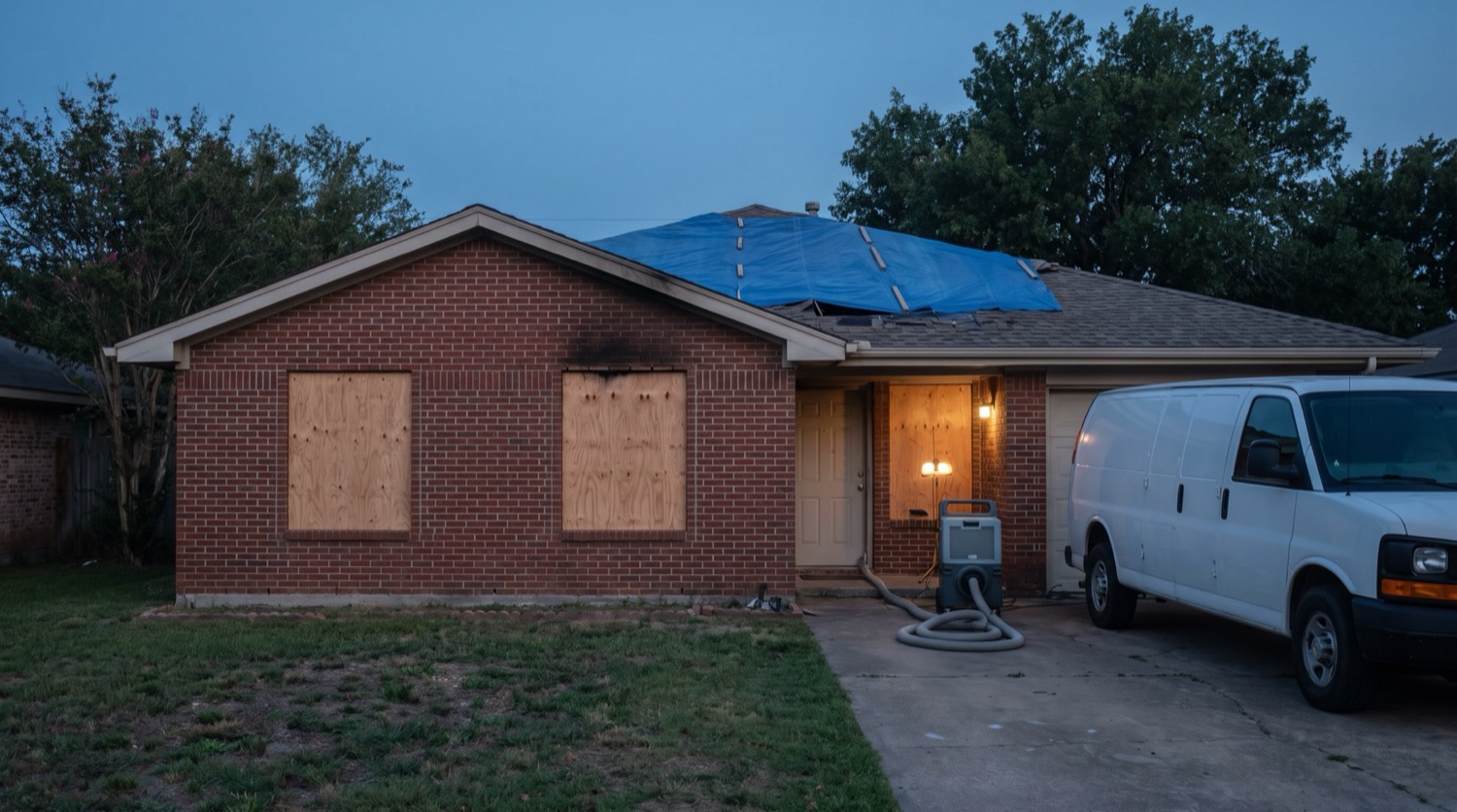
Stryker Restoration is an independent fire and smoke damage contractor for the whole DFW Metroplex. One crew, from the first phone call to the last coat of paint: securing the building, getting the water out, removing soot and smell, saving what can be saved and rebuilding what cannot.
Based in Fort Worth, working across both sides of the Metroplex. A person answers the phone at any hour. No charge for the call, no obligation for the visit.
- On call
- 24 hours, every day
- In the trade
- 20 years in North Texas
- Ownership
- Independent, not a franchise
- Scope
- Emergency to rebuild, one crew
What we do
Everything a fire leaves behind, handled by one contractor.
Most restoration companies in DFW are water-damage companies that also do fire. We are the other way around. The eight services below are the complete job, not a menu.
24/7 Emergency Fire Response
Someone answers the phone at 3 a.m. and a crew is on the road. Securing, stabilizing and stopping the damage from getting worse.
Details → 02Fire & Smoke Damage Restoration
Full assessment, structural cleaning, smoke residue removal and rebuild planning for homes and commercial property.
Details → 03Soot & Odor Removal
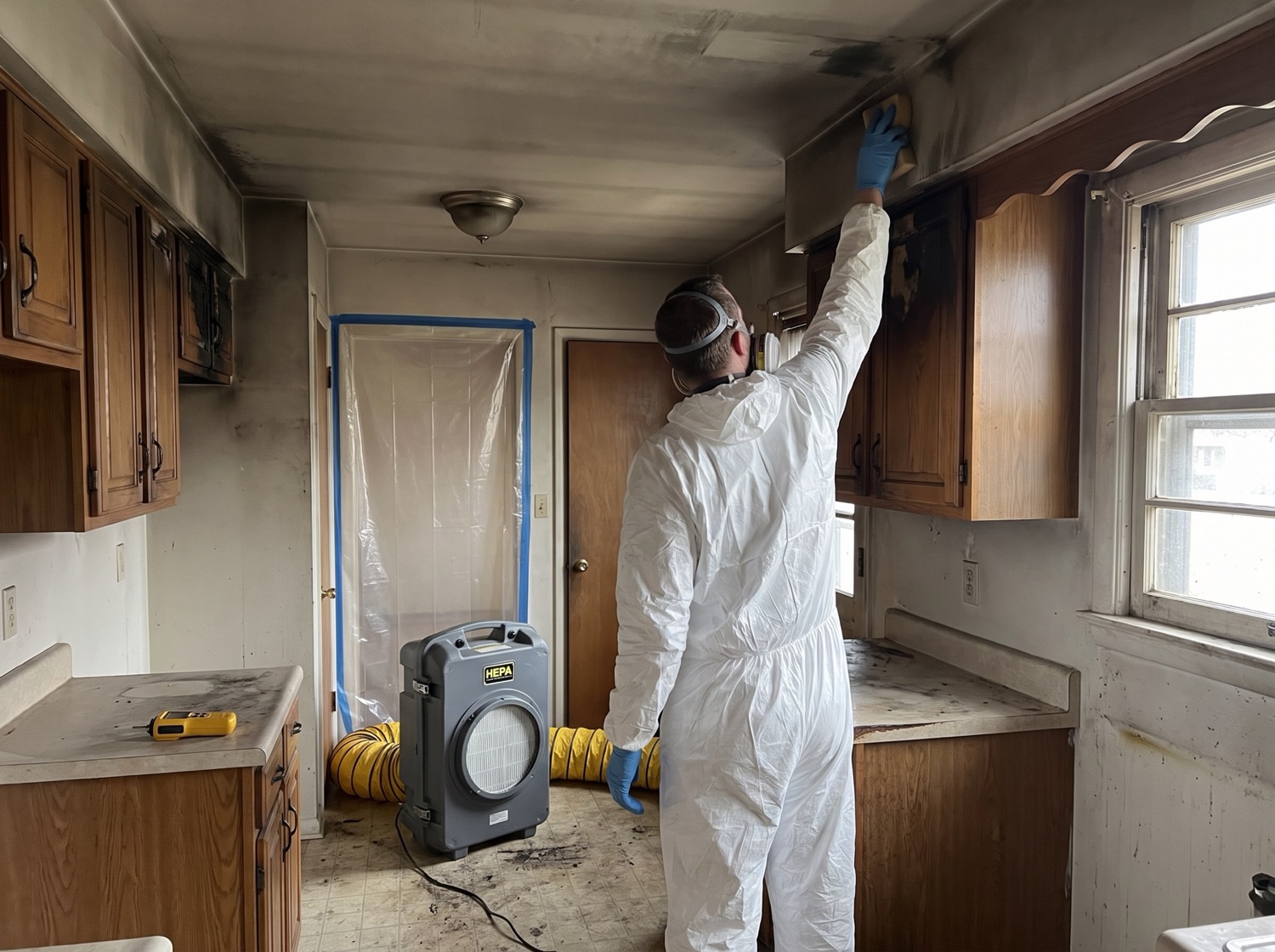
Residue-specific cleaning, HEPA air scrubbing, thermal fogging and ozone or hydroxyl treatment until the smell is actually gone.
Details → 04Water Extraction & Drying
Fire suppression leaves thousands of gallons behind. Extraction, moisture mapping and monitored structural drying.
Details → 05Contents Cleaning & Pack-Outs
Inventoried, photographed and packed. Cleaned off-site, stored securely, returned when the property is ready.
Details → 06Board-Up & Tarping
Emergency securing of openings and roof damage so weather, animals and people stay out while the claim is worked.
Details → 07Reconstruction & Repairs
One contractor from demolition to final coat of paint. Framing, drywall, electrical and plumbing coordination, finishes.
Details → 08Insurance Documentation & Adjuster Coordination
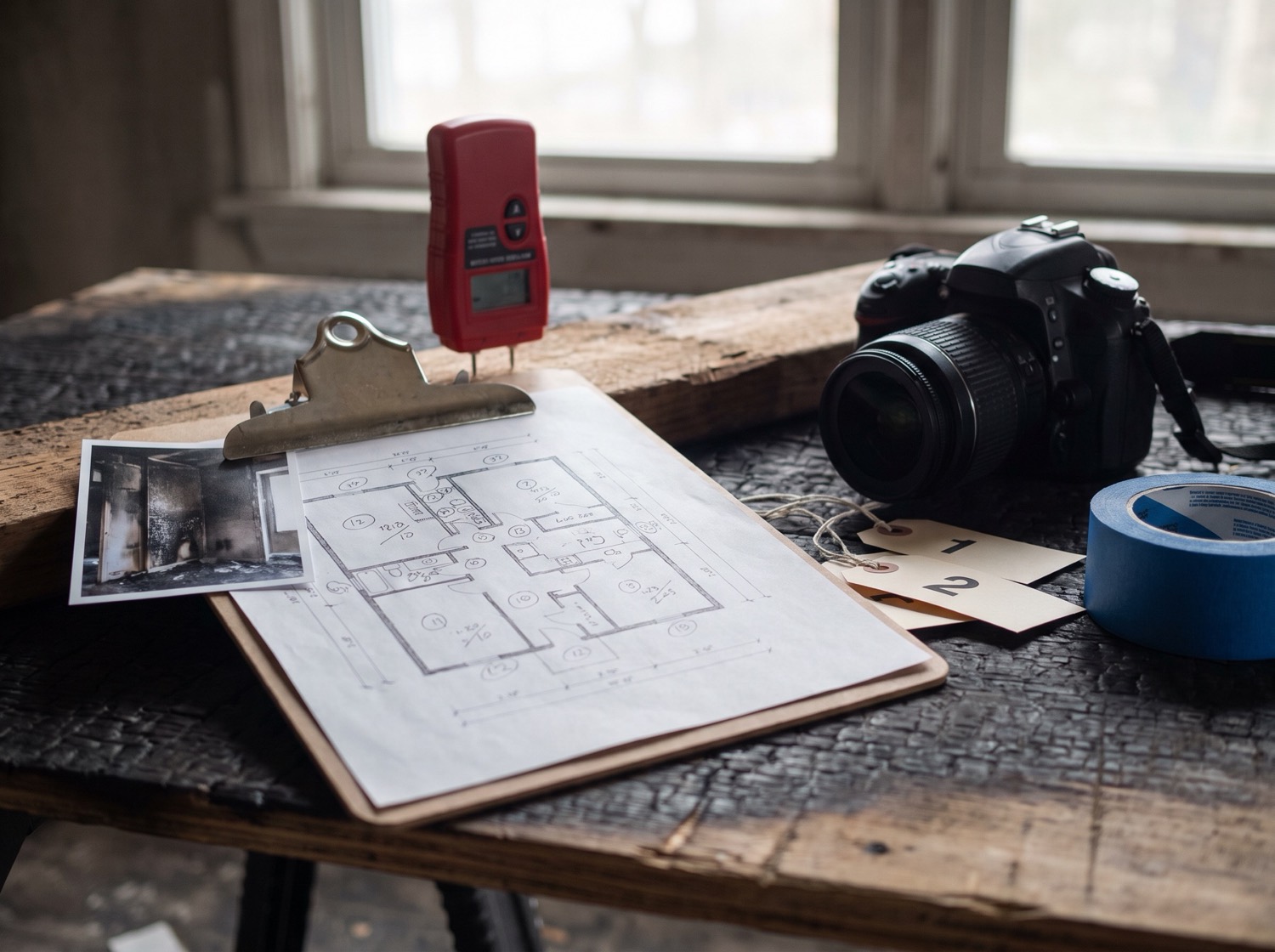
Photographed, itemized, moisture-logged documentation and on-site meetings with your adjuster. We do not adjust or negotiate claims.
Details →Why the first 48 hours matter
Smoke damage gets worse every hour nobody treats it.
Soot is acidic. Within hours it starts etching glass, discoloring plastics and pitting metal. Within days, odor bonds into drywall, insulation and framing. The water the fire department used is soaking into subfloors the whole time. The difference between a three-week job and a three-month job is usually the first two days.
Plastics and synthetic finishes discolor. Marble and porous stone start absorbing acidic residue.
Grout, tubs and fiberglass yellow. Uncoated metals tarnish. Painted trim takes a stain that wiping spreads.
Painted walls yellow for good. Metal pits and rusts. Wood furniture needs refinishing. Vinyl flooring is usually a loss.
Carpet fibers yellow permanently. Plated metals corrode. Glass and crystal etch. Odor is in the framing.
Why the method matters
Four kinds of smoke. Four kinds of cleaning.
The first thing we do in every room is identify the residue. The wrong cleaner on the wrong residue does not just fail; it sets the stain permanently. This is the part a general cleaning crew gets wrong.
| Residue | Comes from | What it is like | Cleaned by |
|---|---|---|---|
| Dry smoke | Fast, hot fires: paper, wood, framing | Powdery, sits on surfaces | Dry sponge and HEPA first, then light wet cleaning |
| Wet smoke | Smoldering, low-oxygen fires: plastics, rubber, foam | Sticky, smeary, strong smell; smears if wiped | Degreasers and solvent cleaning; media blasting on wood |
| Protein | Kitchen fires: burned food, grease | Nearly invisible film, discolors paint, extreme odor | Enzyme and alkaline cleaning of every surface, then sealing and air treatment |
| Fuel oil | Furnace puff-backs, heating-oil fires | Oily, black, spreads through ducts | Solvent cleaning and full duct decontamination |
How it goes
From the first call to moving back in.
Call and secure
We answer, ask six questions and dispatch. Board-up, tarping, water extraction and air scrubbing begin on the first visit.
Assess and document
Every room photographed, every material moisture-tested, every item inventoried. This becomes the record your claim runs on.
Clean and dry
Soot removed surface by surface, structure dried to verified targets, odor treated at the source, contents cleaned off-site.
Rebuild and return
Demolition of what cannot be saved, then framing, drywall, finishes and a final walk-through with you before contents come home.
Insurance, straight
We document. Your adjuster decides. You stay in control.
Texas law is clear that a contractor cannot act as your public adjuster, and we do not try to. What we do is make your claim easy to approve: itemized inventories, moisture logs, photographs of every stage and a written scope in the format adjusters expect. We meet the adjuster on site and supply whatever they ask for. The decisions stay yours.
- You choose your contractor.
An insurer can recommend one; it cannot require one.
- Read anything that assigns your benefits.
We use a work authorization and a direction to pay, not an assignment, and we walk you through what each says.
- Get the scope in writing before demolition starts.
And keep every receipt from the first night onward; additional living expense coverage is real and often unclaimed.
Service area
Both sides of the Metroplex, and the counties around it.
Based in Fort Worth, working from Weatherford to Rockwall and Denton to Waxahachie. Response times vary with distance, traffic and weather; we tell you an honest window on the phone rather than a number from a billboard.
Fire out. Now what?
Call before you touch anything. We will tell you what to do in the next hour, what not to do, and when a crew can be there. No charge for the call, no obligation for the visit.